
The conversation around Cannabidiol (CBD) in India has transformed from hushed whispers to a booming wellness industry. Millions of Indians are seeking natural alternatives for chronic pain, anxiety, and sleep issues, driving curiosity about this non-intoxicating compound derived from the cannabis plant. But as the market floods with tinctures, topicals, and edibles, a single, critical question remains: Is CBD legal in India?
The short answer is Yes, but with a crucial set of nuances and restrictions that every consumer must understand. Unlike the outright ban on most cannabis-related products, CBD has found a regulated, legal pathway rooted in India’s ancient tradition and reinforced by modern law.
This comprehensive 2025 guide cuts through the confusion, explaining the core legislation, the role of Ayurvedic CBD products, and the essential checklist you need before you decide to buy CBD oil India.
Understanding the Basics: What Exactly is CBD?
Before delving into the legal complexities, it’s vital to clarify what CBD is and how it functions.
Cannabidiol, or CBD, is one of over a hundred cannabinoids found in the Cannabis Sativa plant, which is traditionally known as Vijaya in India. Crucially, CBD is not psychoactive. This means that consuming CBD will not produce the “high” or euphoric sensation associated with THC (Tetrahydrocannabinol).
CBD works by interacting with the body’s Endocannabinoid System (ECS), a vast network of receptors that regulates balance (homeostasis) across the immune, nervous, and endocrine systems. The primary CBD benefits are therefore holistic, focusing on restoration rather than simply masking symptoms.
Key CBD health benefits reported by users and researchers include:
- Pain & Inflammation: Modulation of pain signals and reduction of systemic inflammation.
- Mood: Relief from anxiety and stress, helping to manage daily pressures.
- Sleep: Improvement in sleep quality, often resolving issues like CBD for insomnia.
Understanding the CBD effects on the body as restorative, rather than psychoactive, is the key to understanding its legal acceptance in India.
The Legal Framework: NDPS Act and the Leaf Loophole
The legal status of cannabis in India is governed by the Narcotic Drugs and Psychotropic Substances (NDPS) Act of 1985. This act is the reason why marijuana/ganja and Charas (resin) are prohibited, as they contain high concentrations of THC.
However, the NDPS Act contains a critical exemption that creates the legal pathway for CBD:
1. Exclusion of Parts
The NDPS Act specifically excludes the “leaves and seeds” of the cannabis plant from the definition of ‘cannabis’ or ‘narcotic drug’ .
2. The Vijaya Leaf
This exclusion allows for the cultivation, production, and sale of products derived from the cannabis leaf. Since CBD is plentiful in the leaf and stalks (especially in low-THC hemp varieties), products classified as cannabis leaf extract India are legally permissible for medical and scientific purposes.
The THC Threshold: The Golden Rule
For any CBD product to be considered legal CBD India, it must comply with strict THC concentration limits.
- Maximum THC Limit: CBD products are considered legal if they contain less than 0.3% THC.
- Why 0.3%? This trace amount is insufficient to produce psychoactive effects and distinguishes the product from illicit recreational cannabis. Products exceeding this limit are strictly controlled and considered narcotics.
This means the legality is determined not just by the compound (CBD) but by the concentration of its intoxicating counterpart (THC).

The Regulatory Path: CBD as Ayurvedic Medicine
The reason many legitimate CBD products online India are legally sold is due to the involvement of the Ministry of AYUSH (Ayurveda, Yoga, Unani, Siddha, and Homoeopathy) and the classification of these products under the Drugs and Cosmetics Act, 1940.
In India, CBD oils and extracts are predominantly classified and licensed as proprietary Ayurvedic CBD products. This integration into traditional medicine systems is a major factor in their legal acceptance and regulation.
AYUSH Oversight
Companies must obtain licenses from State Licensing Authorities (SLA) or the Ministry of AYUSH to manufacture and sell cannabis-based medicines. This ensures compliance with established safety standards.
Prescription Mandate
For ingestible forms of CBD (like oral tinctures or capsules), a valid prescription is often required from a registered medical practitioner (RMP), including an Ayurvedic physician. This applies particularly to full spectrum CBD oil India which contains the trace amounts of THC.
Topicals Exemption
Generally, external-use products like a CBD topical for pain (e.g., salves or balms) are often available over the counter without a prescription, as they are not ingested and pose minimal systemic risk.
The Consumer Checklist: How to Buy Legal CBD Oil in India
The burden of ensuring legality falls squarely on the consumer. Since the market is still maturing, vigilance is necessary to distinguish licensed, compliant products from illegal ones.
If you are looking to buy CBD oil India, follow this essential checklist:
1. Always Demand Third-Party Lab Testing
This is the single most important safety measure.
- The COA: A reputable brand will provide a batch-specific Certificate of Analysis (COA) from a third party lab tested CBD India facility.
- Verify THC: The COA must explicitly confirm that the THC content is below the legal limit of 0.3%. This verification protects you from legal risk and ensures the product is non-intoxicating.
2. Confirm the Source and Licensing
- Leaf Extract Only: Ensure the product is explicitly marketed as being derived from the Vijaya (cannabis) leaf extract, which confirms its compliance with the NDPS exemption.
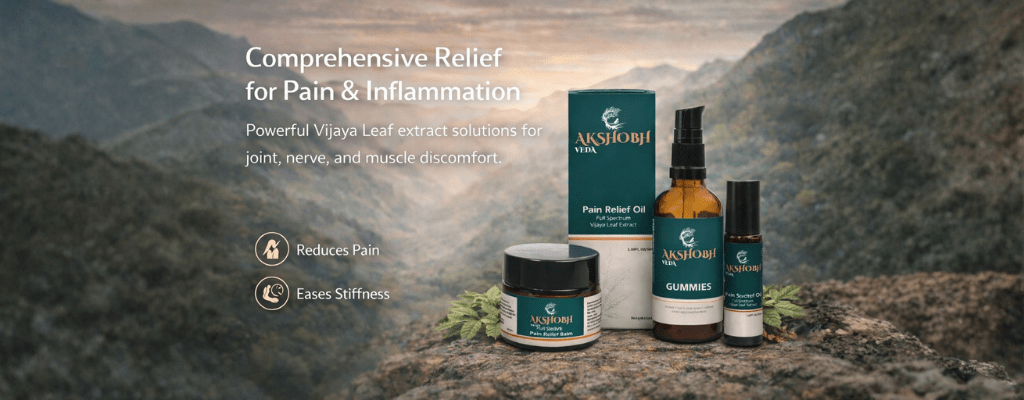
- Licensed Brands: Only buy CBD oil India or other premium CBD wellness India products from Indian companies that clearly display their required Manufacturing or Marketing Licenses issued by a State Drug Authority or the Ministry of AYUSH. Look for names associated with licensed manufacturers, such as Akshobhveda CBD products, who prioritize regulatory compliance.
3. Know When You Need a Prescription
- If you are purchasing therapeutic oral oil (tincture) for conditions like chronic pain, CBD and anxiety, or sleep disorders, you must obtain a prescription from a registered doctor.
- Always retain your prescription and proof of purchase (invoice) as legal documentation, especially for products with higher CBD or CBD THC ratio products.