
The diagnosis of high blood sugar or Type 2 Diabetes often revolves around one crucial number: HbA1c (Glycated Hemoglobin). This reading provides a three-month average of blood sugar levels, acting as a critical barometer for metabolic health and the risk of long-term complications. Achieving a healthy HbA1c—often under 6.5% and ideally below 6%—is the primary goal of any diabetes management plan.
For many, the search for a sustainable, holistic approach leads them away from solutions that merely manage symptoms, toward ancient wisdom. The question, then, becomes: Can Ayurveda help reduce HbA1c naturally?
The answer, increasingly supported by modern research, is a resounding yes. Ayurveda, through its focus on addressing the root imbalances (like insulin resistance and pancreatic cell dysfunction) that cause Madhumeha, offers scientifically-backed herbal and lifestyle strategies.
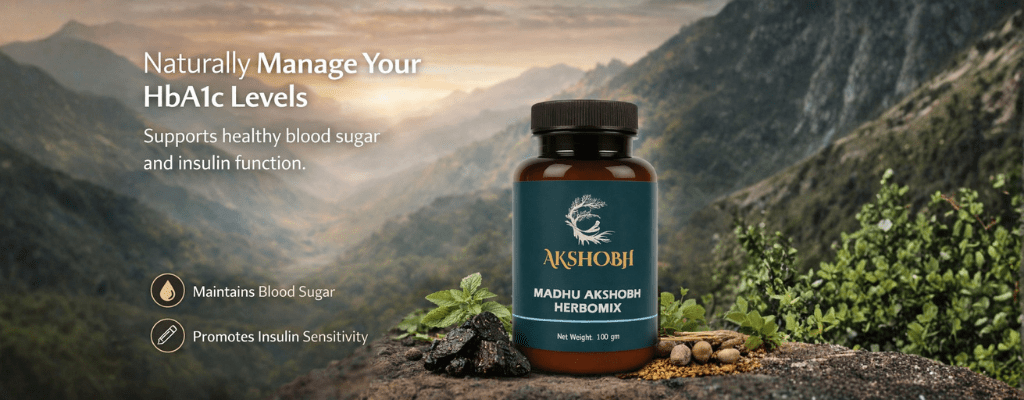
This depth of action is perfectly encapsulated in advanced formulas like Akshobhveda Madhu Akshobh Herbomix, which combine centuries of traditional knowledge with contemporary scientific understanding.
Understanding HbA1c: Why the Average Matters
Before diving into the solution, it’s vital to understand the target. HbA1c is formed when glucose in the bloodstream attaches to the hemoglobin in red blood cells (glycosylation). Since red blood cells live for about 120 days, the HbA1c test gives a reliable picture of blood sugar control over the preceding two to three months.
High HbA1c indicates that chronically elevated sugar levels are causing widespread damage, leading to risks like kidney disease, cardiovascular complications, and diabetic neuropathy (nerve damage). Therefore, finding natural ways to balance blood sugar is essential for long-term protection, not just momentary relief.
The Ayurvedic Approach to Glycemic Control
Ayurveda treats diabetes holistically, emphasizing three core areas for effective management. Unlike conventional treatments that often focus on a single intervention, the Ayurvedic strategy is multi-pronged:
- Regulating Glucose Absorption: Preventing sharp sugar spikes after meals and managing postprandial glucose.
- Improving Insulin Action: Enhancing cellular sensitivity to insulin and boosting its natural production, thereby tackling insulin resistance.
- Protecting Organs and Cells: Shielding the pancreas, nerves, and cardiovascular system from oxidative stress caused by chronic hyperglycemia.
The powerful poly-herbal composition found in products like Akshobhveda Madhu Akshobh Herbomix is specifically engineered to target these three interconnected processes, offering a robust approach to reducing HbA1c.
The Key Herbal Mechanisms for HbA1c Reduction
Ayurvedic texts describe several key botanicals that directly influence the metabolic pathways crucial for glucose control. These herbs are not just “sugar lowerers”; they aremetabolic modulators that feature prominently in the Akshobhveda Diabetes Care strategy.
1. Berberine Powder: The Cellular Energizer
Berberine, a potent alkaloid, is at the forefront of natural diabetes research and a key component in any effective natural blood sugar control supplement India offers. Its effectiveness is deeply rooted in cellular science, often being compared to conventional glucose-lowering medication due to its unique action.
Mechanism Focus: AMPK Activation
- Berberine’s main power is its ability to activate AMPK (Adenosine Monophosphate-Activated Protein Kinase). This enzyme acts as a cellular energy sensor. When activated, it simulates the effects of exercise and fasting, promoting glucose uptake into muscle cells and significantly reducing blood glucose. This action directly improves insulin sensitivity.
Pancreatic Beta-Cell Support
- Furthermore, Berberine supports the health, proliferation, and function of the insulin-producing pancreatic beta cells, addressing the root of the dysfunction.
2. Gudmar (Gymnema Sylvestre): Reducing Dietary Impact
Gudmar, or “sugar destroyer, ” targets the very beginning of the glucose journey: digestion. It is essential for those looking to curb cravings and avoid dramatic sugar spikes after meals.
Blocking Sugar Absorption
The herb contains gymnemic acids that temporarily block sugar receptors in the lining of the intestines. This leads to reduced absorption of dietary glucose into the bloodstream, directly helping to smooth out blood sugar curves and contributing to lower overall HbA1c over time.
3. Karela (Bitter Gourd) and Jamun (Indian Blackberry): Synergistic Support
The combination of Karela and Jamun forms a foundational Ayurvedic sugar control formula renowned for its efficacy.
Karela’s Insulin Mimicry
- Karela is loaded with bioactive compounds like polypeptide-p, which has an action very similar to insulin, promoting glucose uptake by the body’s cells and contributing to improved insulin sensitivity.
Jamun’s Starch Regulation
- The seed kernels of Jamun contain jamboline, which helps modulate the conversion of starch into sugar, ensuring a slower, steadier release of glucose into the blood. This helps achieve Glucose Homeostasis.
4. Vijaysar (Pterocarpus Marsupium): Insulin Enhancement
Vijaysar is a time-tested Ayurvedic herb that supports healthy blood sugar regulation. It helps improve glucose homeostasis and supports the natural activity of insulin, making it a crucial component in any effective natural blood sugar management formula.
5. Amla (Indian Gooseberry) and Seabuckthorn: The Shield of Neuroprotection
The risk of long-term complications—particularly nerve damage and cardiovascular issues—is a primary concern. The inclusion of Amla and Seabuckthorn provides powerful preventative care, distinguishing the Akshobhveda sugar balance supplement as a holistic solution.
- Amla: Exceptionally rich in Vitamin C and powerful antioxidants, Amla counters oxidative stress and chronic inflammation caused by high blood sugar, protecting delicate nerve tissues.
- Seabuckthorn: This berry contributes essential omega-3 fatty acids and vitamins that enhance metabolic function and provide crucial neuroprotection.
6. Neem (Azadirachta Indica): Detox and Immune Support
A pillar of Ayurvedic purification, Neem supports overall diabetic well-being. It is traditionally valued for its ability to detoxify the blood, maintain healthy blood sugar levels, and support immune function, which is often compromised in individuals with long-term hyperglycemia.
The Integrated Solution: Why Choose MADHU AKSHOBH HERBOMIX?
The true strength of Akshobhveda Madhu Akshobh Herbomix lies in the synergy of its ingredients. It is a carefully calibrated Ayurvedic herbomix for blood sugar control, eliminating the need to manage multiple individual supplements.
The formulation addresses all facets of diabetes management:
- Glycemic Control: Berberine, Karela, and Vijaysar boost insulin function, activate AMPK, and drive sugar into cells for energy—critical for lowering HbA1c.
- Pancreatic Health: Supports regeneration and protection of pancreatic beta cells.
- Long-Term Protection: Antioxidants from Amla and omega-3 rich Seabuckthorn provide essential Neuroprotection.
Choosing this diabetic-friendly Ayurvedic herbomix is choosing a comprehensive strategy aimed at maintaining healthy HbA1c levels and fostering metabolic freedom.
Scientific Validation and the Ayurvedic Advantage
Modern clinical studies have shown that poly-herbal formulations containing herbs like Gudmar, Karela, and Fenugreek can lead to a significant reduction in HbA1c, often comparable to conventional monotherapy, with a strong safety profile.
The advantage of choosing an Akshobhveda Ayurvedic Diabetes Product lies in its multi-pathway action—boosting insulin sensitivity, supporting beta-cell health, and delivering neuroprotection simultaneously.
Your Next Steps: Embracing a Holistic Lifestyle
1. Dietary Discipline: Reduce refined carbohydrates and sugars consistently.
2. Regular Monitoring: Track blood sugar and HbA1c improvement over time.
3. Consultation: Always consult a healthcare provider or Ayurvedic specialist.
Madhu Akshobh Herbomix offers a natural solution for stable, long-term glycemic control.